It’s no secret that Mother Nature loves to get weird, and man it when she does. But of all the freaky creations she’s dreamt up during her 4.5 billion years of existence—god-like mystery monoliths, swirling crimson deserts, oceans that glow—one of the strangest has to be Ethiopia’s Danakil Depression. This volcanic region is known as a geological wonder and it is located in one of the most barren and arid regions of the planet. The Danakil Depression is one of the most exceptional sites that exist, composed of hardened lava covered with a thick layer of salt. Danakil Depression seems more alien than Earth-like and it is the hottest place on Earth and during the summer months, temperatures can get up to a high of 55 degrees Celsius (131 degrees Fahrenheit) thanks to geothermal heat caused by volcanic activity. Also, the place is one of the lowest (over 400 feet below sea level) and it attracts three main types of people to the area: salt miners, scientists and travelers. As one of the hottest and most exotic environments on Earth, the Danakil Depression is helping to redefine the conditions for life on our own planet and beyond. Many travelers attracted by the depression’s alien-looking landscape. As they have done for centuries, miners travel hours — often by camel caravans — to extract salt slabs from the flat pans around Lakes. Salt is the region’s “white gold” and was a form of currency in Ethiopia until the 20th century.
History
The land we know as Ethiopia has a long, fascinating, and reasonably well-documented history, during which time it was mostly known as Abyssinia. That its history is well recorded is no surprise; the ancient Egyptians knew of the region because of the Nile, and people from Palestine and Arabia were regular visitors centuries before Christianity arrived. It’s also home to some of the oldest hominid remains yet discovered, those of ‘Lucy’ and ‘Ardi’, who are three to four million years old. Both were found in one of the hottest parts of Africa, the Afar region near the Red Sea. Ethiopia is the oldest independent country in Sub-Saharan Africa. The earliest evidence of Ethiopian history is from around 1000 BC when the queen of Sheba visited King Solomon. It is believed that Ethiopia is the place where mankind originated. Bones of what was believed to be that of human ancestor were discovered in Ethiopia, which is believed to be about 5 million years old. The history of Ethiopia begins with Lucy. Lucy was a female hominoid that lived in what is now called the Awash Valley in Hadar some 3.2 million years ago. When her skeletons were discovered in 1974, Ethiopia then claimed that it was the first dwelling of mankind. Ethiopia first appears in written history as the Aksumite Empire, which was probably established around the beginning of the Christian era. Christianity was introduced in the 4th century by Frumentius of Tyre, who was appointed bishop of the Ethiopian diocese by Patriarch Athanasius of Alexandria.
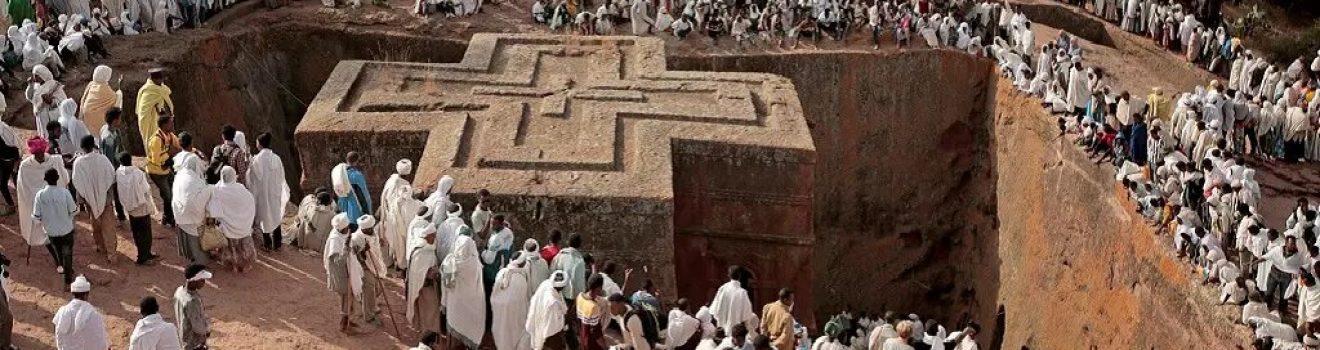
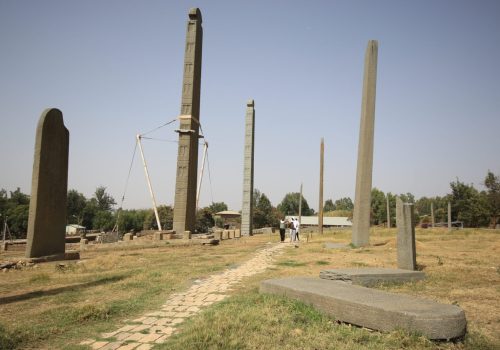
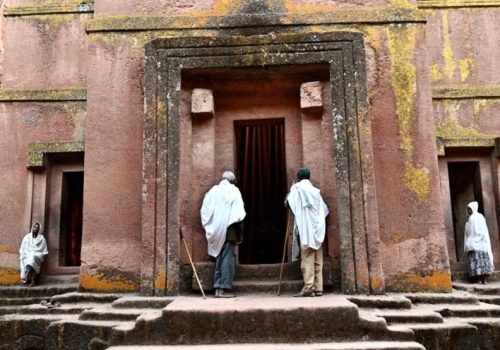
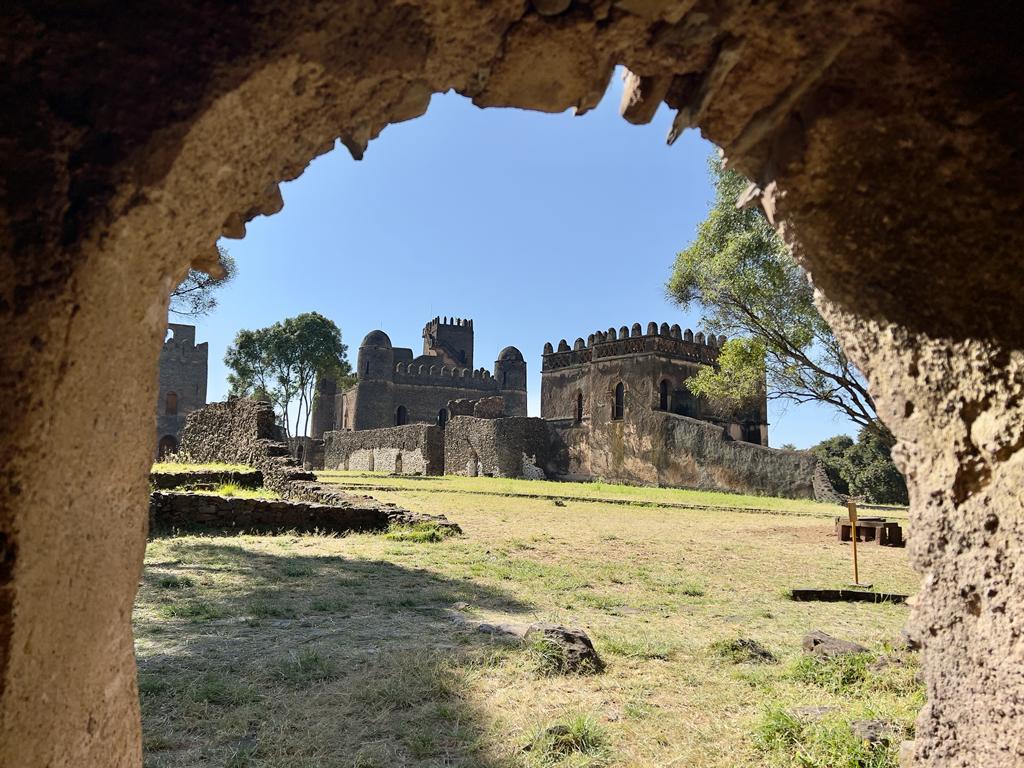
At the turn of the first millennia, the dominant kingdom was Aksum. This was a very advanced civilization. They were the first Africans to mint coins. They were powerful enough to take military expeditions into South Arabia. Aksum began to decline in the seventh century. Aksum’s foundation is suggested to be as early as 300 BC. Very little is known of the time period between the mid-first millennium BC to the beginning of Aksum’s flourish, thought to be around the first century CE. There is little in common between the Aksumites and the earlier civilizations. The Zagwe Dynasty was next to rule Ethiopia. The Kings of this Dynasty have devoted Orthodox Christians and they built several rock churches. The most prized of the Zagwe kings was King Lalibela. The Solomonic Dynasty (or Solomonic Restoration) is a period of history in Ethiopia between 1270 to 1636. It is so called because, in 1270 when Emperor Yekuno Amlak became emperor and he declared to be the lineal descent of Menelik I, son of King Solomon and Queen Sheba, he ended the short-lived rule of the Zagwes off of Ethiopia, who did not claim descent to Menelik I. Emperors in the Solomonic period did not utilize capital cities like preceding empires. They instead had what was termed as instant or moving capitals. The emperor, his army, nobles, and other members of the monarchy lived in tents and huts. They often did not stay in one place any more than four months at a time, moving only when they had exhausted the land or the residents, which were required to supply cattle or food or any other thing that was demanded.
CULTURE
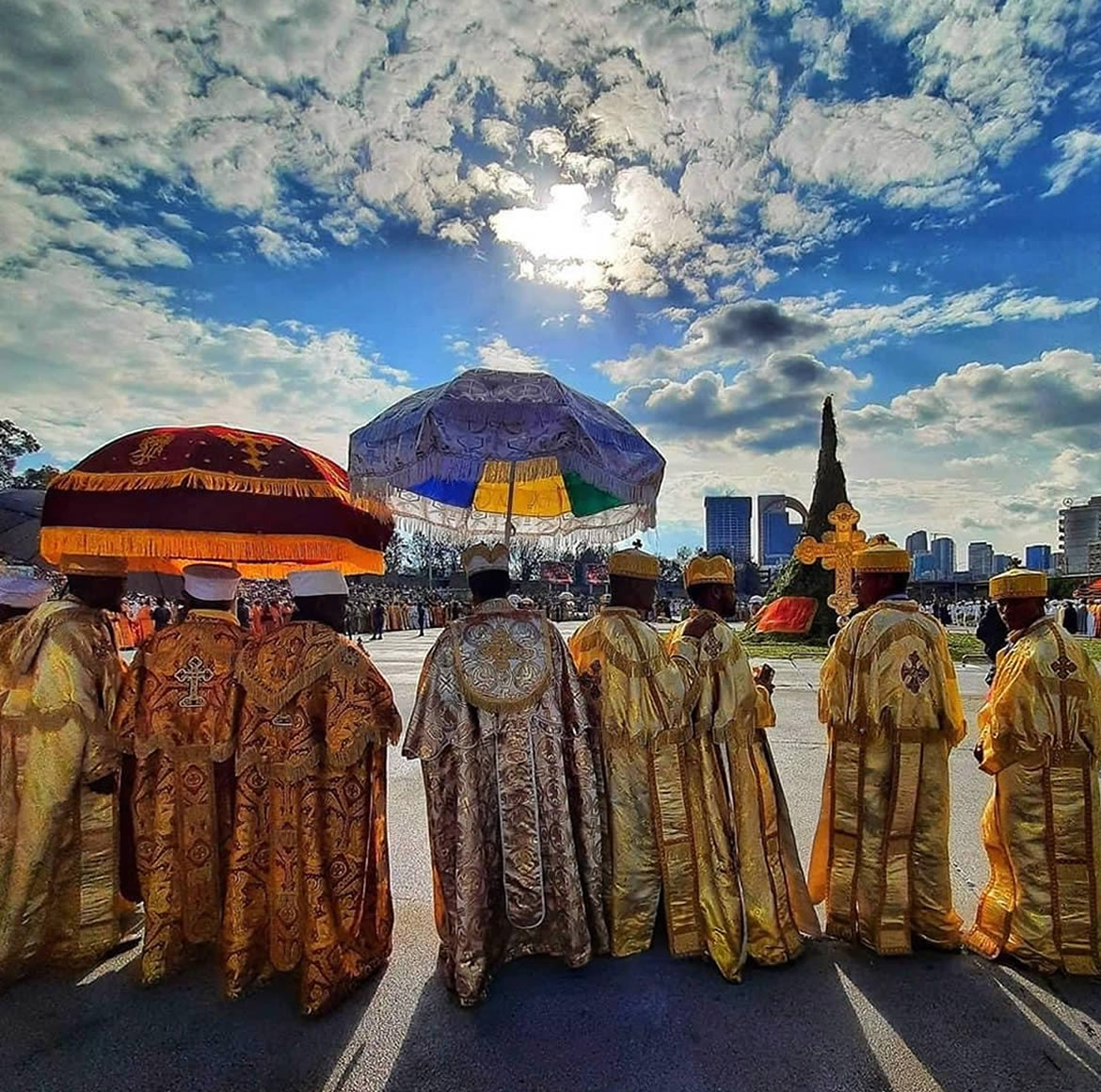
Ethiopia is a diverse mix of cultures that have co-existed for hundreds of years inside the country’s border. The population is largely divided along ethnolinguistic lines, with more than 80 different ethnic groups residing within their own specific customs, practices, and rituals. And there are close to 80 different dialects spoken as well. As the only country in Africa never to have been fully colonized, Ethiopia is a rare glimpse into a culture little influenced by the West. Like many African nations, it has its own languages, but it is the only African country that also has its own unique alphabet. Ethiopia also has its own time (the daily clock starts at 6 am, not midnight), and its own calendar, roughly seven years and nine months behind our own. One of the most significant areas of Ethiopian culture is its literature, which is represented predominantly by translations from ancient Greek and Hebrew religious texts into the ancient language Ge’ez, modern Amharic, and Tigrigna languages. Ge’ez is one of the most ancient languages in the world and is still used today by the Ethiopian Orthodox Tewahedo Church. The Ethiopian Orthodox Tewahedo Church has its own unique customs and traditions, which have been influenced by Judaism.
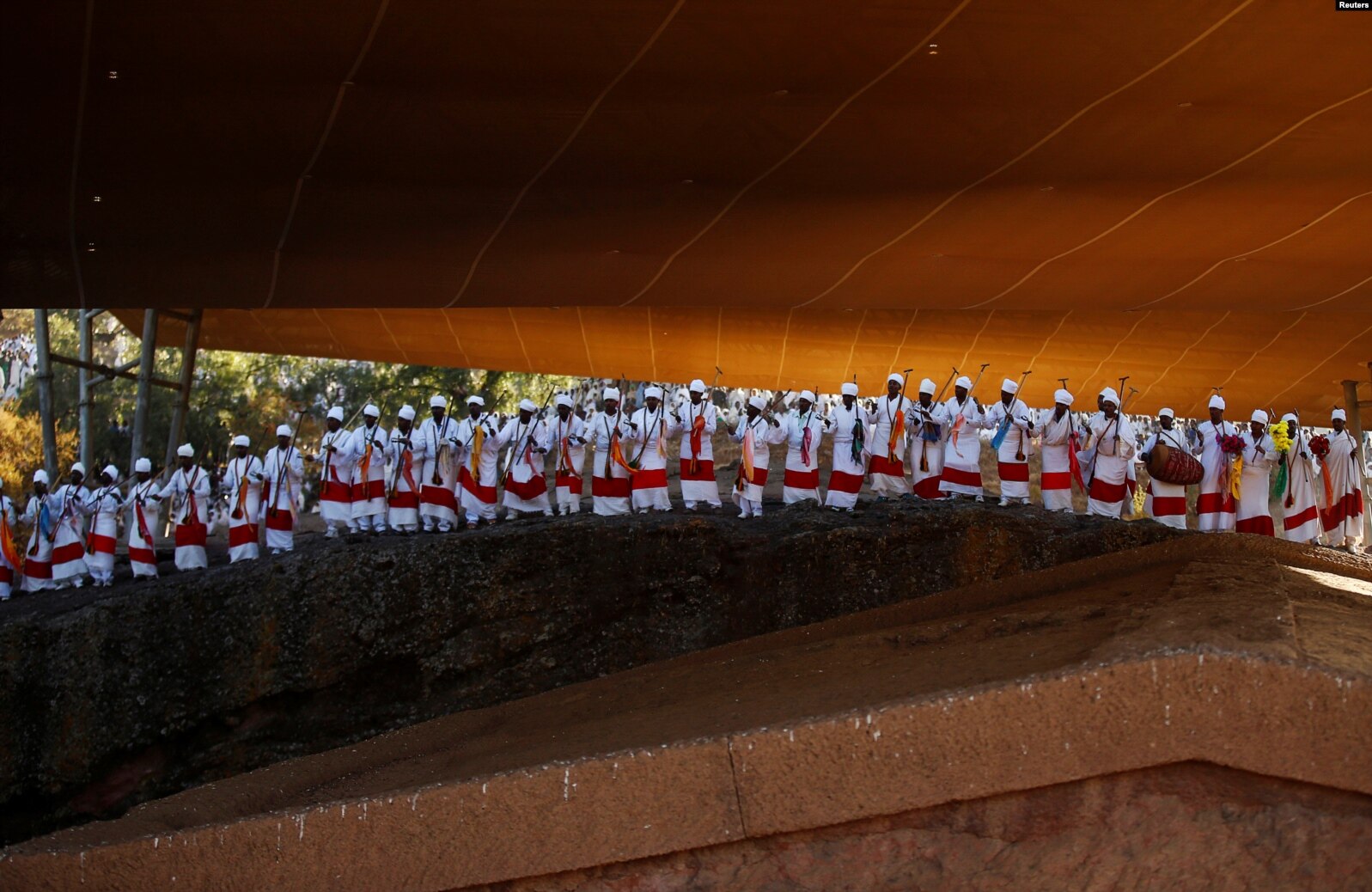
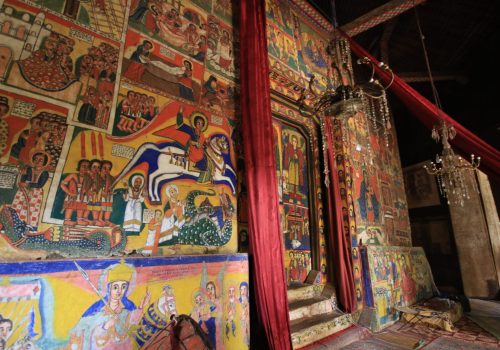
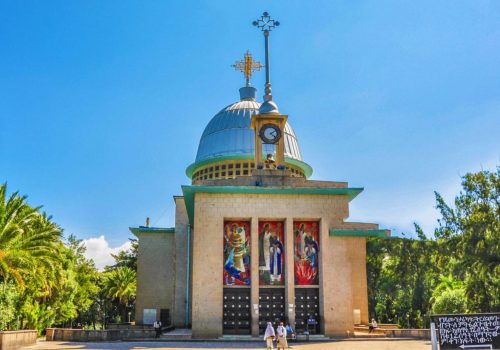
In general, the country ascribes to Christianity. The country is proud of its heritage and that it embraced Christianity in the 4th century, long before most of Europe. While the majority ascribes to Christianity (50% to the Ethiopian Orthodox Church and 10% Protestant), 32% ascribe to Islam, and about 5% to other traditional religions. Muslims exist largely peaceably alongside Christians. Religion is a generally accepted everyday part of life here, and while it does infiltrate so many aspects of life Music and dance play a great role in Ethiopian life and festivals. Instruments used most often are the following: kebaro drums, single-stringed masenko (fiddle-like), washint (flute-like), the krar (lyre-like), and begenna (harp-like). Ethiopian people love to sing, and they don’t hold back. Special occasions rarely occur without the accompaniment of singing and dancing. Ethiopians have a long history of religious painting and this intricate work can be seen in almost every church in the country. The two-dimensional figures often tell a story and serve the dual purpose of being both uplifting and educational in teaching religious truths and stories.
NATURE
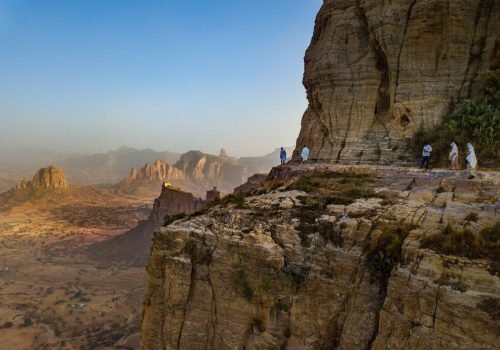
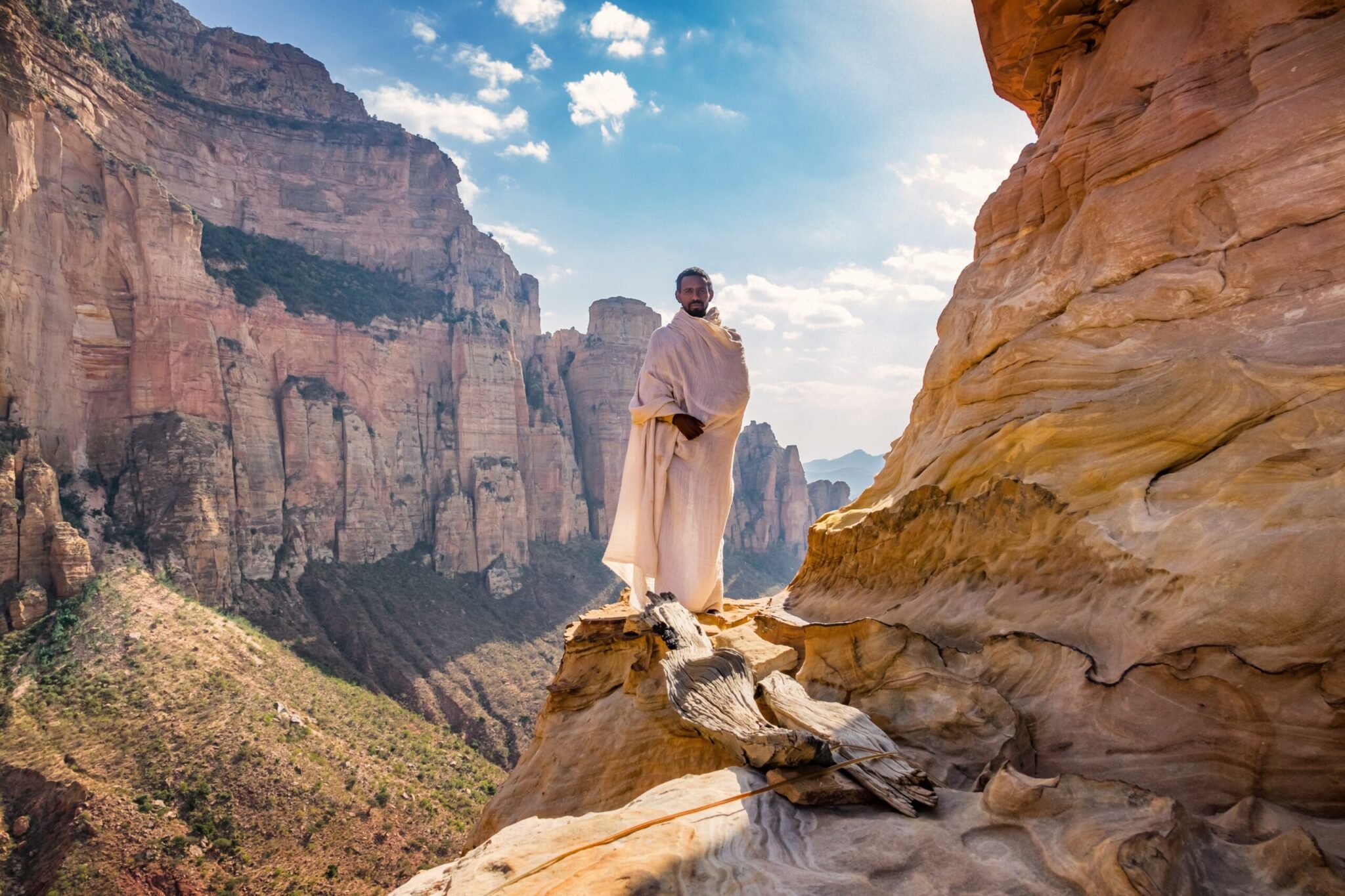
Ethiopia is a country rich in geographical diversity. It consists of rugged mountains, flat-topped plateaus, deep gorges, and river valleys. It is erosion, volcanic eruptions, and tectonic movements over the ages that have contributed to the nation’s diverse topography. The highest altitude is at Ras Dashen (4,620 m above sea level) and the lowest altitude is at Denakil Desert (120 m below sea level). A large percentage of the country consists of high plateaus and mountain ranges, dissected by major rivers such as Blue Nile, Tekeze, Awash, Omo, and Wabi Shebelle, etc… All in all, Ethiopia consists of nine major rivers and 19 lakes. The Blue Nile, the chief headstream of the Nile, rises in Lake Tana in northwest Ethiopia. The Great Rift Valley extends across the Ethiopian plateau, which is divided into two by a series of north-south tending escarpments.
The escarpments are very steep towards the rift valley on either side. In general, the western highlands have high rims on their western edges, but low-lying plateaus and plains to the east and south. Ethiopia has four major seasons: Summer ‘Kiremet’ (June – August); autumn ‘Tibe’ (September – November); winter ‘Bega’ (December – February) and spring ‘Belg’ (March – May). However, the coldest month is not always in ‘Bega’ and the hottest month is not always in ‘Kiremet’. Ethiopia lies near the equator where maximum heat from the sun is received. The length of days and nights are almost the same in most regions. The rainfall is largely concentrated during the summer months of June, July and August. In general, the climate is moderate, except in the lowlands of the Danakil Desert and the Ogaden, which are hot all the year. The highlands are temperate with night frost in the mountains. A single rainy season in the west brings twice as much rain as the wet seasons in the east.