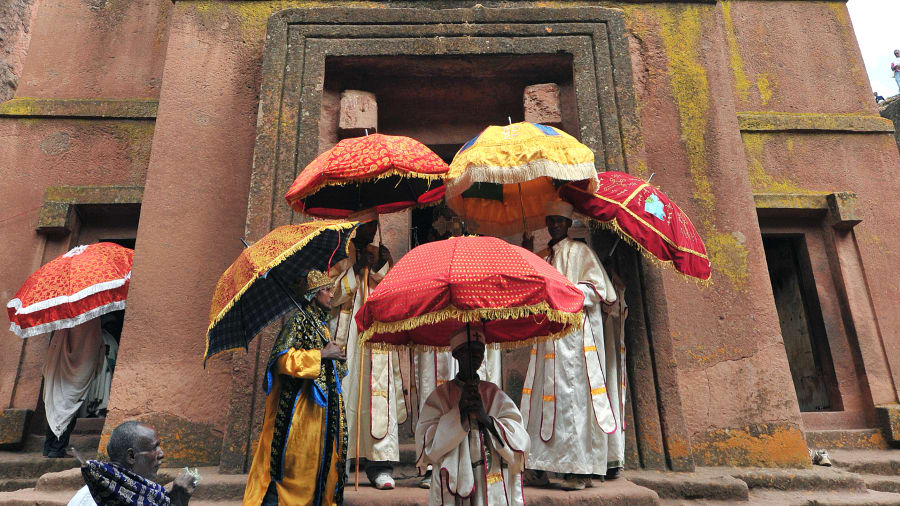
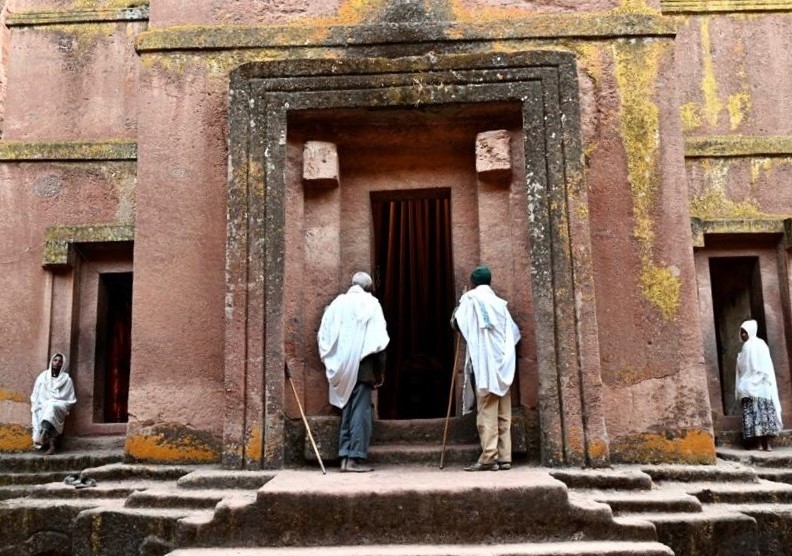
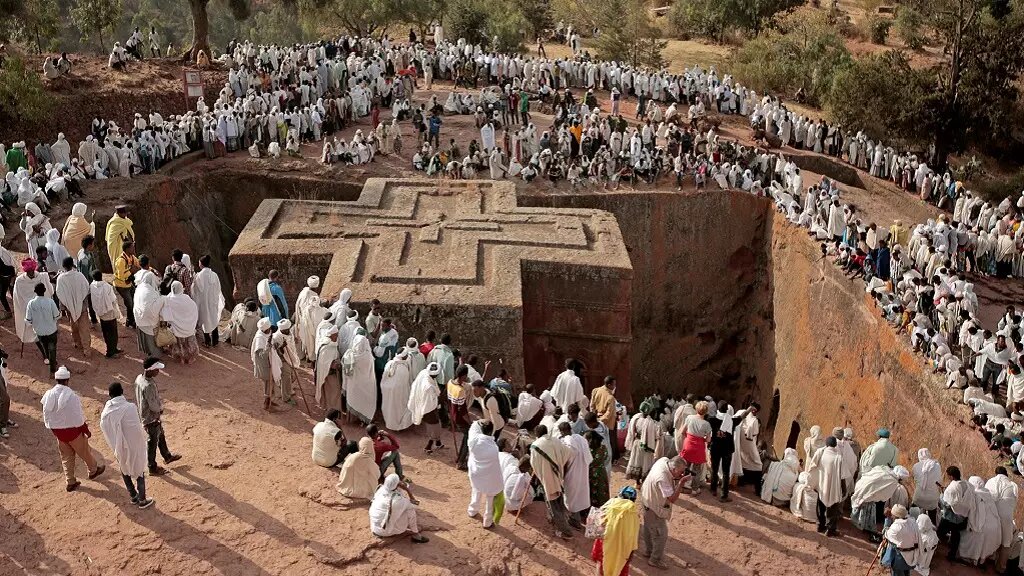
At the time when Westerners were building their cathedrals, Ethiopians were building colossal churches carved into the rock… The site of Lalibela is one of Ethiopia’s archaeological gems. Twelve churches, entirely cut in the rock, emerge on the surface of the ground. The monuments are nested in a network of galleries and underground passages, which provide access to open-air courtyards in the center of which rise the churches. Basilica, cruciform church or simple chapel: all have a particular architecture and decoration. The set is attributed to King Lalibela, who reigned at the turn of the 12th and 13th centuries.
The testimonies of the intervention of this sovereign on the site are numerous. But this existed before his reign. The very first excavations indeed consisted of galleries and underground cavities, located under the surface of the rocky dome. Monumental freestone structures works were erected between the 10th and 11th centuries, while vast underground rooms communicated with these constructed spaces. The functions of these arrangements are still largely unknown to us, but they prove to a long experience of working with stone, an essential prerequisite for the mastery necessary to clear entirely monolithic buildings.
It is only with the reign of Lalibela, one to two centuries later, those old rooms are transformed to arrange chapels, and that churches are cut in the rock. The debris from these new excavations is dumped on the previous constructions, to erase all traces. Lalibela illustrates Ethiopia’s participation in a fashion of the Christian world: to recreate a little Jerusalem in the kingdom as a symbol of his divine election. The topography of the site